Did you know the average homeowner spends over $48,000 on remodeling projects each year? Residential remodeling does more than update a home’s appearance. It impacts comfort, energy savings, and property value in meaningful ways. With the right approach, homeowners can reimagine any space to better suit their needs and future plans while avoiding common financial and regulatory pitfalls along the way.
Key Takeaways
| Point | Details |
|---|---|
| Comprehensive Planning is Essential | Successful remodeling requires careful goal setting, budgeting, and selection of qualified professionals to bring your vision to reality. |
| Understanding Different Remodeling Types | Homeowners should recognize the categories of remodeling—interior, exterior, structural, and energy-efficient—to align projects with their objectives. |
| Navigating Permits and Regulations | Compliance with building codes and obtaining necessary permits is crucial for the safety and legality of any remodeling project. |
| Financial Preparedness is Key | Developing flexible budgets and understanding cost implications will help mitigate risks and maximize the investment in your home. |
Table of Contents
- Defining Residential Remodeling Fundamentals
- Different Types Of Residential Remodeling
- Step-By-Step Remodeling Process
- Permits, Codes, And Professional Roles
- Costs, Risks And Financial Implications
Defining Residential Remodeling Fundamentals
Residential remodeling is the strategic process of improving, upgrading, or transforming existing living spaces to enhance functionality, aesthetic appeal, and overall property value. Home renovation goes beyond simple repairs, representing a comprehensive approach to reimagining residential environments. According to Wikipedia’s research on renovation, these improvements are driven by multiple critical factors including safety upgrades, energy efficiency enhancements, and personal aesthetic preferences.
Typical residential remodeling projects can encompass a wide range of modifications across different home areas:
- Interior updates (electrical systems, plumbing)
- Exterior improvements (siding, roofing, masonry work)
- Property expansions (garage additions, landscaping)
- Living space reconstructions
Homeowners pursue remodeling with diverse motivations. Some seek to improve personal comfort, while others aim to address structural issues, increase energy savings, or expand their living spaces. Our guide on residential construction provides deeper insights into the nuanced world of home transformation. The process requires careful planning, understanding of local building codes, and often collaboration with professional contractors who can translate vision into reality.
Successful residential remodeling isn’t just about changing appearances—it’s about creating spaces that genuinely improve quality of life, increase property value, and reflect the unique personality and needs of those who call the house home.
Different Types Of Residential Remodeling
Residential remodeling encompasses several distinct categories, each addressing unique homeowner needs and property enhancement objectives. According to research from Kocher Construction, these types can be broadly classified into three primary domains: interior, exterior, and structural remodeling, with an emerging category of energy-efficient upgrades.
Interior Remodeling Projects
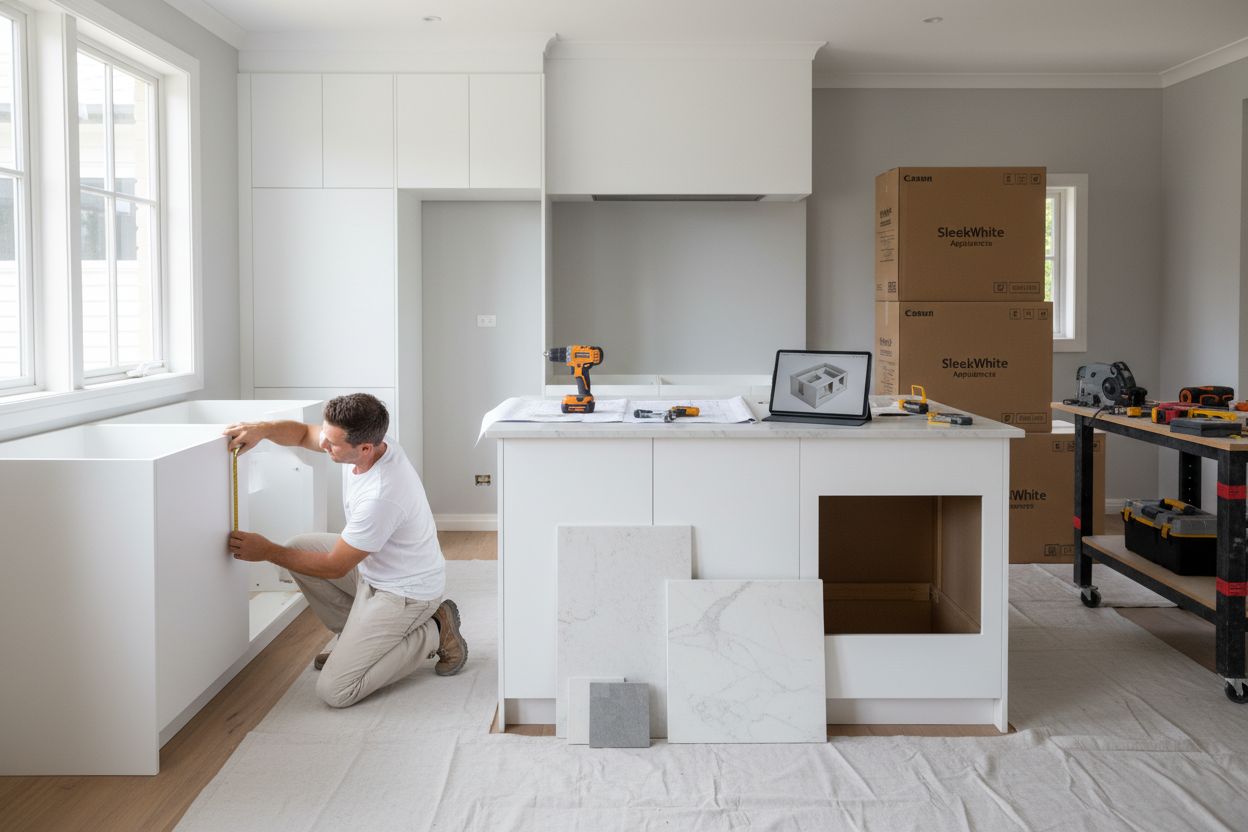
Interior remodeling focuses on transforming living spaces to improve functionality and aesthetic appeal. Key areas typically include:
- Kitchen renovations: Updating countertops, cabinetry, and appliances
- Bathroom remodels: Modernizing fixtures, tiles, and layout
- Living room redesigns: Enhancing spatial flow and visual appeal
- Basement conversions: Creating additional usable living spaces
- Bedroom upgrades: Improving comfort and personal style
Exterior and Structural Transformations
Exterior remodeling and structural modifications dramatically impact a home’s appearance, value, and structural integrity. These projects range from:
- Roof replacements
- Siding upgrades
- Deck and porch construction
- Comprehensive landscaping
- Foundation repairs
- Room additions
- Wall removal for open-concept designs
Our comprehensive construction services can help guide you through these complex transformation processes.
An increasingly significant trend is energy-efficient remodeling, which includes installing solar panels, improving insulation, implementing smart home technologies, and upgrading to eco-friendly systems. These renovations not only reduce environmental impact but also provide long-term cost savings for homeowners, making them an intelligent investment in modern residential improvement strategies.
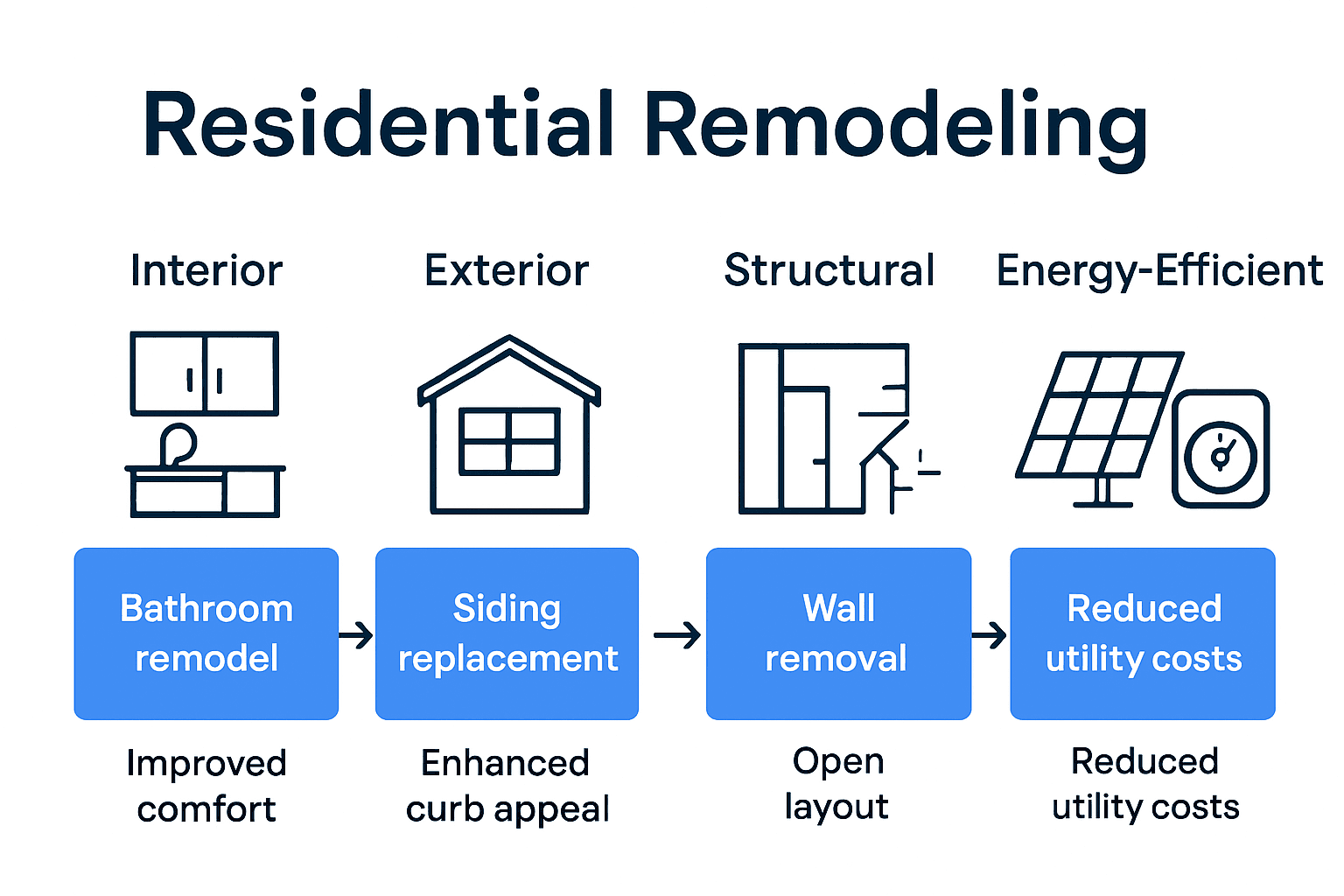
Here’s a comparison of primary residential remodeling types:
| Remodeling Type | Typical Projects | Key Benefits |
|---|---|---|
| Interior Remodeling | Kitchen renovation Bathroom remodel Basement finish | Enhanced comfort Modern aesthetics |
| Exterior Remodeling | Roofing Siding Deck addition | Improved curb appeal Durability |
| Structural Changes | Room additions Wall removal Foundation repair | Expanded space Structural safety |
| Energy-Efficient Upgrades | Solar panels Insulation Smart systems | Lower utility bills Eco-friendly |
Step-By-Step Remodeling Process
Home remodeling is a complex journey that requires careful planning, strategic execution, and professional collaboration. According to Remodeling Done Right, the process begins with envisioning your goals and understanding your long-term objectives for the space.
Initial Planning Phase
The remodeling process typically unfolds through several critical stages:
- Goal Visualization: Define your project’s purpose and desired outcomes
- Needs Assessment: Evaluate current space limitations and future requirements
- Budget Development: Establish a realistic financial framework
- Professional Selection: Identify and interview potential contractors
Comprehensive Project Stages
According to research from AR Build NC, a comprehensive renovation encompasses four primary phases:
Planning & Preparation
- Detailed consultation
- Site assessment
- Design development
- Budgeting
- Permit acquisition
Pre-Construction
- Contract finalization
- Material selection
- Project scheduling
- Site preparation
Construction
- Demolition
- Structural modifications
- Plumbing and electrical work
- HVAC updates
- Insulation
- Flooring installation
- Fixture placement
- Painting
Our comprehensive construction services specialize in guiding homeowners seamlessly through each of these intricate stages.
The final phase involves project completion and quality assurance, which includes thorough inspections, comprehensive cleanup, and a detailed project handover. This meticulous approach ensures that your remodeling vision transforms from concept to reality, meeting both aesthetic and functional expectations.
Permits, Codes, And Professional Roles
Building permits and professional expertise form the critical foundation of successful residential remodeling projects. According to the International Code Council, building codes serve as comprehensive guidelines that ensure construction safety, structural integrity, and compliance with regional regulations.
Professional Roles in Remodeling
The remodeling process involves multiple specialized professionals, each bringing unique expertise:
- Architects: Develop comprehensive design plans for complex projects
- Certified Designers: Specialize in specific renovation areas
- Design/Build Contractors: Offer integrated design and construction services
Selecting the Right Professionals
According to Remodeling Done Right, choosing the right professionals requires careful consideration:
- Seek personal and professional referrals
- Verify professional licenses
- Confirm comprehensive insurance coverage
- Compare detailed project estimates
- Assess knowledge of current building codes
Permit and Code Compliance
Every remodeling project must navigate a complex landscape of regulatory requirements. The International Building Code and International Residential Code provide model standards that local jurisdictions adapt and enforce. These regulations cover:
- Structural modifications
- Electrical system updates
- Plumbing renovations
- Safety infrastructure
- Energy efficiency standards
Our comprehensive construction services specialize in managing these intricate regulatory landscapes, ensuring your project meets all necessary legal and safety requirements. Successful remodeling isn’t just about aesthetic transformation—it’s about creating spaces that are safe, compliant, and built to last.
Costs, Risks And Financial Implications
Residential remodeling involves substantial financial investments and potential risks that require careful strategic planning. According to recent research from the Associated Press, homeowners must navigate complex economic landscapes characterized by inflation, rising construction costs, and fluctuating interest rates.
Financial Planning Strategies
Successful remodeling requires comprehensive financial preparation:
- Budget Flexibility: Allow 10-20% contingency for unexpected expenses
- Cost Management: Obtain multiple contractor estimates
- Value Prioritization: Focus on improvements with long-term property value enhancement
- Insurance Updates: Ensure comprehensive coverage for renovation work
Risk Mitigation Approaches
Key risk management tactics include:
- Thorough contractor background checks
- Detailed written contracts
- Verifying professional licensing
- Maintaining robust communication channels
- Documenting all project specifications
Project Cost Considerations
Financial implications extend beyond immediate renovation expenses:
- Material price fluctuations
- Potential property value increases
- Energy efficiency savings
- Maintenance cost reductions
- Tax implications of home improvements
Our comprehensive construction services specialize in providing transparent cost structures and risk management strategies. As recommended by industry experts, we help clients navigate the complex financial landscape of home renovations, ensuring that your investment delivers maximum return and minimal unexpected complications.
Ready To Reimagine Your Home? Partner With Pro Value Contracting
Thinking about remodeling your home can bring both excitement and worry. The article highlighted just how complex residential remodeling can be, from understanding building codes and permits to managing costs and finding reliable professionals. Maybe you want to modernize your kitchen, upgrade your outdoor space, or tackle structural challenges but you are unsure where to begin or who you can trust in San Diego.
Explore Our Full Remodeling Solutions
You do not have to face these challenges alone. Discover why San Diego homeowners rely on Pro Value Contracting for everything from custom renovations to urgent restoration. Our expert team guides you through every step, providing clear project planning, honest cost estimates, and the highest craftsmanship. Visit our main site today to get a free estimate and start transforming your living space into something truly exceptional. Take action now and turn your home remodeling vision into reality.
Frequently Asked Questions
What is the process of residential remodeling?
The residential remodeling process typically involves several steps: goal visualization, needs assessment, budget development, professional selection, planning and preparation, pre-construction, construction, and project completion with quality assurance.
What types of projects fall under interior remodeling?
Interior remodeling projects include kitchen renovations, bathroom remodels, living room redesigns, basement conversions, and bedroom upgrades, all aimed at enhancing functionality and aesthetic appeal.
Why is energy-efficient remodeling important?
Energy-efficient remodeling helps reduce a home’s environmental impact and lowers utility bills, making it a cost-effective long-term investment. Common upgrades include solar panels, improved insulation, and smart home technologies.
How do building permits and codes affect remodeling projects?
Building permits and codes ensure that renovations comply with safety and structural integrity standards. It’s essential for homeowners to understand local regulations and work with professionals who can navigate these requirements.
Recommended
- Residential vs. Commercial Construction: Key Differences Every Client Should Know – Pro Value Contracting
- Uncategorized – Pro Value Contracting
- dev-admin – Pro Value Contracting
- Pro V Residential Construction Services – Pro Value Contracting
- Understanding Remodeling Plumbing Considerations For Homeowners – Legacy Plumbing & Drain – Emergency Plumbers Of Sacramento
- 7 Key Home Renovation Trends for 2025 You Should Know