Planning a home repair or renovation can feel overwhelming. Some people rush straight to hiring the first person they find, but that can leave you with shoddy work and regret. The real secret is in the prep work, and homeowners who thoroughly document their needs with detailed photos and specifics get far more accurate and competitive estimates every time. Most skip this step, but it gives you the upper hand before the first contractor even walks in the door.
Table of Contents
- Step 1: Identify Your Repair Or Renovation Needs
- Step 2: Research Local Service Providers
- Step 3: Prepare Detailed Project Descriptions
- Step 4: Contact Providers For Estimates
- Step 5: Compare Estimates And Ask Questions
- Step 6: Select Your Preferred Service Provider
Quick Summary
| Key Point | Explanation |
|---|---|
| 1. Thoroughly assess project needs | Conduct a careful inspection to note damages and renovations required. Document everything for accurate contractor communication. |
| 2. Research local contractors systematically | Use multiple resources like directories and reviews to find trustworthy service providers. Verify their credentials and area of expertise. |
| 3. Prepare detailed project descriptions | Organize your observations and photos into a clear narrative. Include measurements and expected outcomes to help contractors deliver precise estimates. |
| 4. Request estimates from several providers | Contact at least three to five contractors for competitive pricing. Use standardized templates to maintain clarity in communication. |
| 5. Evaluate proposals critically | Compare estimates beyond price to assess value. Scrutinize materials, timelines, and contractor reputation for informed decision-making. |
Step 1: Identify Your Repair or Renovation Needs
Before requesting free estimates for home repairs, understanding the precise scope of your project is crucial. This initial step serves as the foundation for accurate contractor quotes and ensures you communicate your needs effectively. Identifying your repair or renovation requirements involves a systematic assessment of your property’s current condition, potential problem areas, and desired outcomes.
Begin by conducting a thorough visual inspection of the area requiring repairs or renovation. Walk through your property methodically, examining walls, floors, ceilings, and structural elements for signs of damage, wear, or deterioration. Take detailed notes about specific issues you observe, such as water stains, cracks, uneven surfaces, or outdated fixtures. Document everything with clear photographs which will later help contractors understand the extent of work needed.
Consider both functional and aesthetic aspects of your potential project. Are you addressing a critical structural issue like foundation damage or roof leaks? Or are you looking to improve your property’s appearance and value through cosmetic renovations? Understanding whether your project is emergency-driven or improvement-focused will significantly impact how contractors approach your estimate request. Learn about property restoration signs that demand immediate attention, which can help you distinguish between routine maintenance and urgent repairs.
Measure and quantify the specific areas needing work. For renovation projects, determine precise dimensions, materials currently in place, and any potential complications like uneven surfaces or access restrictions. If you are unsure about technical details, consider consulting a professional who can provide preliminary insights. Gathering this information demonstrates to potential contractors that you are a serious and prepared client, which often leads to more accurate and competitive estimates.
Prepare a concise summary of your project that includes:
- Specific areas requiring repair or renovation
- Observed damage or deterioration
- Desired outcomes and aesthetic preferences
- Rough measurements and spatial considerations
- Any known historical context about the property
By meticulously documenting and understanding your repair or renovation needs, you set the stage for receiving precise, tailored estimates that align with your expectations and budget.
Here is a checklist table to help you organize the essential information to prepare before contacting contractors for estimates.
| Preparation Task | Description | Why It Matters |
|---|---|---|
| Inspect Property | Conduct a thorough visual inspection of areas needing repair or renovation | Ensures no issues are overlooked and provides a clear project scope |
| Take Photographs | Document damage and project areas with clear images | Visual evidence helps contractors understand the work involved |
| Note Specific Issues | Detail observed damage, deterioration, or needed upgrades | Clear communication leads to more accurate estimates |
| Measure Spaces | Record precise dimensions of areas requiring work | Accurate measurements are crucial for material and labor estimates |
| Summarize Desired Outcome | Specify functional or aesthetic goals for the project | Guides contractors in proposing suitable solutions |
| Gather Historical Info | Collect previous repair records or relevant property details | Provides context for potential challenges or special requirements |
Step 2: Research Local Service Providers
Researching local service providers is a critical step in obtaining accurate and reliable free estimates for home repairs. This process goes beyond simple internet searching and requires strategic investigation to ensure you connect with reputable, skilled professionals who can effectively address your specific renovation or repair needs.
Start by leveraging multiple information channels to compile a comprehensive list of potential service providers. Local business directories, online review platforms, and professional association websites offer excellent starting points. Word of mouth recommendations from neighbors, friends, and family members can also provide trustworthy leads. Pay special attention to contractors with demonstrated expertise in your specific type of home repair or renovation project.
Online review platforms and the Better Business Bureau offer invaluable insights into a contractor’s reputation, work quality, and customer satisfaction. Look for providers with consistently positive reviews, detailed feedback about project outcomes, and transparent communication. Be wary of contractors with numerous negative reviews or unresolved complaints. Verify each provider’s professional credentials, including licensing, insurance, and any specialized certifications relevant to your specific repair needs.
Develop a systematic approach to evaluating potential service providers. Create a comparison spreadsheet or document that tracks key information about each contractor. Include details such as:
- Company name and contact information
- Years of experience in the industry
- Specific areas of expertise
- Customer review ratings
- Average project completion time
- Licensing and insurance verification status
Reach out to your shortlisted contractors through multiple communication channels. A professional service provider should be responsive, willing to answer preliminary questions, and demonstrate genuine interest in understanding your project requirements. During initial conversations, assess their communication style, technical knowledge, and willingness to provide detailed information.
Consider scheduling brief preliminary consultations with top candidates. These initial meetings can help you gauge the contractor’s professionalism, technical expertise, and compatibility with your project vision. A reputable service provider will be transparent about their capabilities, offer insights into potential challenges, and demonstrate a clear understanding of your specific home repair or renovation needs.
Step 3: Prepare Detailed Project Descriptions
Creating a comprehensive and detailed project description is essential for obtaining accurate free estimates from service providers. This step transforms your initial observations into a clear, professional communication that enables contractors to understand the full scope of your home repair or renovation project.
Clarity and specificity are paramount when documenting your project requirements. Begin by organizing your initial notes and photographs into a structured narrative that tells the complete story of your repair or renovation needs. Include precise measurements, existing material descriptions, and any unique characteristics of the space that might impact project complexity. This level of detail demonstrates your preparedness and helps contractors provide more precise estimates.
Photographic documentation plays a crucial role in project description preparation.
INFOGRAPHIC:infographic_content] Capture high-quality images from multiple angles, ensuring good lighting and clear focus. Include wide shots that provide context and close-up images that highlight specific damage or areas requiring work. [Contractors often use these visual references to assess project requirements and potential challenges, making your documentation an invaluable communication tool.
Draft a comprehensive project narrative that encompasses the following critical components:
- Exact location and dimensions of the repair or renovation area
- Current condition and visible issues
- Desired outcome and specific performance expectations
- Preferred materials or design considerations
- Any known structural or environmental constraints
- Timeline expectations and potential flexibility
Consider potential variations and contingencies that might impact your project. Are there access limitations? Potential structural complexities? Unique architectural features? Communicating these potential challenges upfront allows contractors to provide more accurate and realistic estimates. Include information about your property’s age, previous renovations, and any known historical modifications that might influence the repair or renovation process.
Prepare supplementary documentation that supports your project description. This might include architectural drawings, previous repair records, or manufacturer specifications for existing fixtures or materials. The more comprehensive your documentation, the more precise and competitive the estimates you will receive. Remember that a well-prepared project description not only helps contractors provide accurate quotes but also demonstrates your professionalism and commitment to a successful project outcome.
Step 4: Contact Providers for Estimates
Contacting service providers to request free estimates marks a critical transition from preparation to potential project execution. This step requires strategic communication, professionalism, and a systematic approach to gathering comprehensive project quotes.
Initiate contact with your shortlisted contractors using multiple communication channels. Email provides a formal, documented record of your initial inquiry, while phone calls allow for immediate dialogue and nuanced discussion. Prepare a standardized communication template that includes your detailed project description, ensuring consistency and clarity across all provider interactions. When reaching out, attach the comprehensive documentation you prepared in previous steps, including project photographs, measurements, and specific requirements.
According to consumer protection guidelines, requesting estimates from multiple providers offers significant advantages. Aim to contact at least three to five reputable contractors to ensure a comprehensive understanding of potential costs and approaches. This approach not only provides competitive pricing but also allows you to assess the professionalism and expertise of different service providers.
During your initial communication, be prepared to provide additional context and answer potential follow-up questions. Responsive and transparent communication demonstrates your seriousness and helps contractors develop more accurate estimates. Some providers might request an on-site assessment, which can offer the most precise quote. Be flexible and accommodating while also being clear about your project timeline and expectations.
Track and document each provider interaction meticulously. Create a comparison spreadsheet that includes:
- Contractor contact information
- Date of initial contact
- Estimated response time
- Preliminary quote range
- Proposed project timeline
- Additional notes or unique service offerings
Be mindful of potential red flags during the estimation process. Extremely low quotes might indicate subpar materials or inexperienced contractors, while unusually high estimates could suggest unnecessary complexity. Look for providers who offer transparent, itemized quotes that clearly break down potential costs and explain their proposed approach.
Set clear expectations for estimate delivery. Request written quotes that remain valid for a specific period, typically 30 to 60 days. Confirm whether the estimate is fully complimentary and if it includes an on-site assessment. By maintaining organized, professional communication, you increase the likelihood of receiving accurate, competitive estimates that align with your project goals.
Step 5: Compare Estimates and Ask Questions
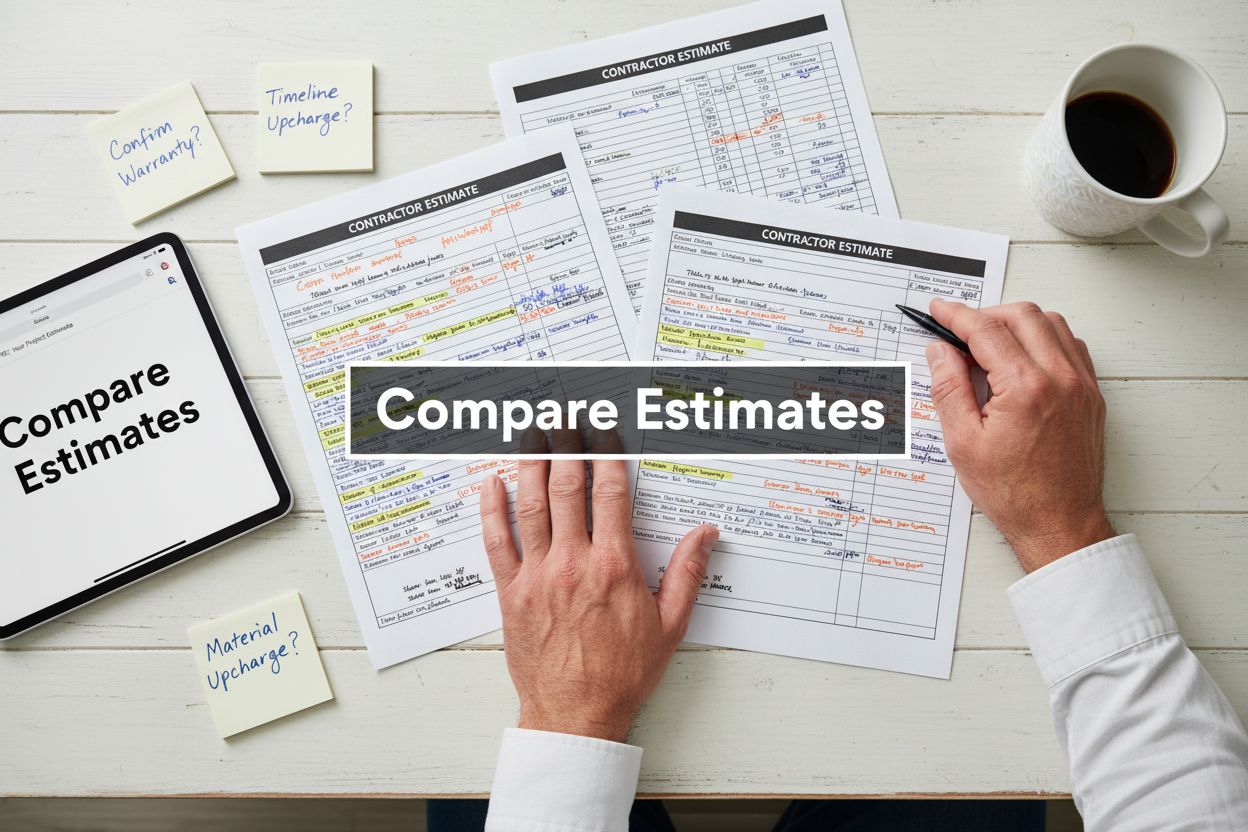
Comparing estimates requires more than simply examining price points. This critical step involves a comprehensive analysis of each contractor’s proposal, evaluating not just cost but overall value, expertise, and alignment with your specific project requirements.
Develop a systematic approach to estimate comparison by creating a detailed evaluation matrix. This tool will help you objectively assess each proposal’s strengths and potential limitations. Look beyond the total cost and examine the granular details of each estimate, including material specifications, proposed timelines, labor breakdown, and potential additional expenses. A lower price might seem attractive, but it could indicate compromised quality or hidden future costs.
Experts recommend carefully scrutinizing the details of each estimate to understand the full scope of proposed work. Pay close attention to the following key comparison elements:
- Comprehensive material specifications
- Detailed labor cost breakdown
- Proposed project timeline
- Warranty or guarantee provisions
- Potential additional or unexpected expenses
- Contractor’s proposed approach to potential complications
Prepare a list of strategic follow-up questions for each contractor. These inquiries should address any ambiguities or gaps in their initial estimates. Effective questioning demonstrates your project knowledge and helps clarify potential misunderstandings. Focus on understanding the reasoning behind specific cost allocations, potential project challenges, and the contractor’s approach to unexpected complications.
Consider scheduling follow-up consultations with top candidates to discuss their estimates in depth. During these conversations, observe the contractor’s communication style, technical expertise, and willingness to provide transparent, detailed explanations. A reputable service provider will welcome your questions and provide clear, comprehensive answers that instill confidence in their capabilities.
Be cautious of estimates that deviate significantly from the average. Extremely low bids might indicate potential shortcuts or inexperience, while overly high estimates could suggest unnecessary complexity or inflated pricing. Look for estimates that provide a balanced, reasonable approach to your specific project needs. Consider the contractor’s reputation, previous work examples, and overall professional presentation alongside the financial proposal.
Ultimately, your goal is to select a service provider who offers the best combination of expertise, reliability, and value. Trust your research, rely on the comprehensive preparation you’ve completed, and choose a contractor who demonstrates a genuine understanding of your project’s unique requirements.
Step 6: Select Your Preferred Service Provider
Selecting the right service provider represents the culmination of your careful research and thorough evaluation process. This critical decision requires a holistic approach that goes beyond simply choosing the lowest bidder or the most charismatic contractor.
Prioritize comprehensive compatibility over isolated factors when making your final selection. Evaluate each potential contractor through a multi-dimensional lens that considers technical expertise, communication style, professional reputation, and alignment with your specific project requirements. The ideal service provider should demonstrate not just technical proficiency, but also a genuine understanding of your project’s unique nuances and your overall vision.
According to consumer protection standards, several key considerations should guide your final decision. Examine each contractor’s professional credentials, including licensing, insurance coverage, and industry certifications. These credentials serve as objective indicators of their commitment to professional standards and operational excellence.
Develop a comprehensive evaluation framework that encompasses multiple critical assessment criteria:
- Overall estimate value and transparency
- Professional credentials and industry certifications
- Communication responsiveness and clarity
- Proposed project timeline and flexibility
- Warranty and post-project support offerings
- Cultural and professional compatibility
Conduct a final round of due diligence before making your ultimate selection. Request and contact references from previous clients, paying close attention to their experiences with project completion, communication, and overall satisfaction. Review the contractor’s portfolio of completed projects similar to yours, looking for evidence of consistent quality and innovative problem-solving.
Carefully review the final contract documentation, ensuring all discussed terms, expectations, and project specifications are explicitly outlined. Verify that the contract includes comprehensive details about project scope, materials, timeline, payment schedule, and potential contingency plans. Do not hesitate to seek clarification on any ambiguous language or request modifications that provide additional protection for your interests.
Remember that selecting a service provider is about establishing a collaborative partnership. The most successful home repair and renovation projects emerge from strong communication, mutual respect, and aligned expectations. Trust your comprehensive research, rely on your systematic evaluation process, and choose a contractor who not only meets your technical requirements but also demonstrates a genuine commitment to delivering exceptional results.
Use the following table as an overview of all main steps involved in requesting free estimates for home repairs, including the objective and key outcome for each step.
| Step | Objective | Key Outcome |
|---|---|---|
| 1. Identify Needs | Assess and document repair or renovation requirements | Clear project scope for accurate communication |
| 2. Research Providers | Find and evaluate reputable local contractors | Shortlist of qualified candidates |
| 3. Prepare Descriptions | Create detailed project documentation | Professional, comprehensive briefing for contractors |
| 4. Contact for Estimates | Reach out to contractors using prepared materials | Receive written, itemized estimates |
| 5. Compare & Question | Analyze estimates and clarify uncertainties | Well-informed comparison of proposals |
| 6. Select Provider | Choose best-fit contractor based on holistic evaluation | Confident contractor selection with clear expectations |
Ready for Reliable Home Repair Estimates in San Diego?
If you are feeling stressed about getting accurate home repair or renovation estimates, you are not alone. Many property owners find it overwhelming to document issues and compare contractors, especially in emergency situations like fire, flood, or storm damage. After reading how to request free estimates for home repairs, you know the importance of detailed assessments, clear communication, and choosing a trustworthy service provider. At Pro Value Contracting, we understand the urgency and uncertainty you face when your home or business needs quick attention or large-scale restoration. Our team is dedicated to making the process simple, transparent, and stress-free for you.
Take the next step with confidence. Request your free estimate today and experience our trusted approach to repairs, renovations, and emergency restorations throughout San Diego. Visit Pro Value Contracting to discover all our residential and commercial solutions, see project examples, and connect with experts who respond fast and prioritize quality results. When accuracy and peace of mind matter most, our team is ready to help now.
Frequently Asked Questions
How do I start the process of requesting free estimates for home repairs?
Begin by identifying your repair or renovation needs through a thorough inspection of your property. Document specific issues, desired outcomes, and take measurements to prepare for contacting contractors.
What information should I include when contacting service providers for estimates?
Include a detailed project description, photographs of the area needing work, specific measurements, and any unique circumstances or preferences that may affect the project. This helps contractors understand your needs and provide accurate estimates.
How many contractors should I contact for estimates?
It’s advisable to reach out to at least three to five reputable contractors. This ensures you have a comprehensive understanding of potential costs and varied approaches to your project.
What should I look for when comparing estimates from different contractors?
Evaluate each estimate not just by price, but by the details provided, including material specifications, labor costs, proposed timelines, and warranty provisions. Consider the contractor’s reputation and communication style as well.
Recommended
- Pro V Residential Construction Services – Pro Value Contracting
- Pro V Junk & Demo – Pro Value Contracting
- Top 5 Signs Your Property Needs Immediate Restoration – Pro Value Contracting
- Understanding Interpreting Cleaning Quotes