Written by Pro Value Contracting | Published on June 2025
In California, flood damage and water damage are treated as two completely separate categories by insurance companies, and confusing them can cost you $20,000 or more out of pocket. Standard homeowners insurance covers most sudden, internal water damage but excludes flooding from external natural sources almost entirely.
This article explains the legal and insurance distinction between the two, what each type of policy covers, how San Diego’s unique geography creates specific risks, and what steps to take immediately after water enters your home.
Understand Why Insurers Treat Flood and Water Damage Differently
Insurance companies separate these two categories because the causes, sources, and risk profiles are fundamentally different. One originates inside your home or building system. The other originates outside, from natural water movement.
Water damage, as defined by most homeowners policies, results from a sudden and accidental internal event. Think a burst pipe, an overflowing washing machine, or a roof leak after a windstorm. The water source is your own plumbing, appliances, or building envelope.
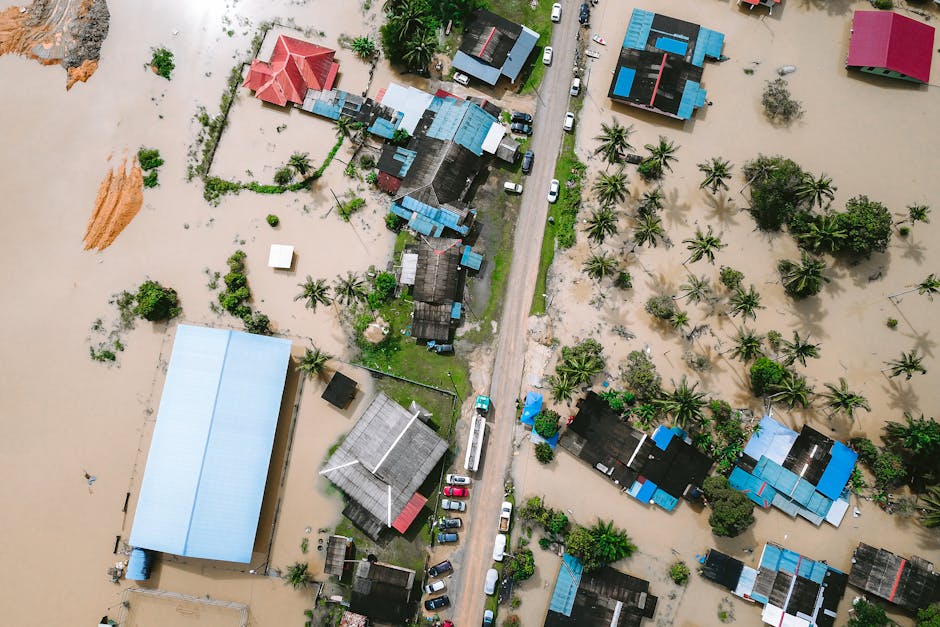
Flood damage, by contrast, is defined as water that originates from an external natural source and affects two or more properties or two or more acres of land. This definition comes directly from the National Flood Insurance Program (NFIP) and is widely adopted by private insurers.
A creek overflowing into your neighborhood, storm surge from the Pacific, or sheet flow from heavy rainfall running across your property, all of these are floods by insurance definition. Your standard homeowners policy will not pay for any of them.
See What a Standard California Homeowners Policy Actually Covers
Most homeowners in San Diego carry an HO-3 policy, which is the most common form in California. It covers sudden and accidental water damage from specific internal causes. Here is what is typically included and excluded.
| Damage Cause | Typically Covered | Typically Excluded |
|---|---|---|
| Burst pipe from freezing | Yes | |
| Appliance malfunction (washing machine, dishwasher) | Yes | |
| Accidental roof leak during storm | Yes (water damage portion) | |
| Slow leak or seepage over time | Yes (neglect exclusion) | |
| Sewer or drain backup | Only with added rider | Often excluded by default |
| Groundwater or rising water table | Yes | |
| Storm surge or ocean water intrusion | Yes (flood exclusion) | |
| River or creek overflow onto property | Yes (flood exclusion) | |
| Heavy rain runoff entering home | Yes (flood exclusion) |
One important gray area is sewer backup. Many San Diego homeowners assume their policy covers it, but it often requires a separate endorsement that costs $50 to $150 per year. Without it, a single sewer backup event can generate $10,000 to $30,000 in uninsured losses.
Know the True Financial Risk for San Diego Homeowners
San Diego sits in a region where flood risk is often underestimated. Coastal areas like Mission Beach, Pacific Beach, and Ocean Beach face storm surge risk. Inland neighborhoods near the San Diego River, Sweetwater River, and other flood-prone channels face overflow risk during major rain events.
FEMA flood maps show large portions of San Diego County in moderate-to-high risk zones. Yet flood insurance adoption in Southern California remains lower than the national average, partly because residents associate flooding with other regions.
Here is a realistic cost comparison of what homeowners face without the right coverage.
| Damage Scenario | Estimated Repair Cost | Covered Without Flood Policy? |
|---|---|---|
| Burst pipe, 500 sq ft affected | $8,000 to $15,000 | Yes (standard HO-3) |
| Washing machine overflow, one floor | $4,000 to $10,000 | Yes (standard HO-3) |
| Sewer backup, 200 sq ft | $7,000 to $20,000 | Only with sewer rider |
| Flash flood, 1,000 sq ft affected | $25,000 to $75,000 | No, requires NFIP or private flood policy |
| Storm surge, coastal property | $50,000 to $200,000+ | No, requires flood policy |
At Pro Value Contracting, we have responded to water and flood emergencies across San Diego County. The homeowners who face the most financial stress are almost always those who discovered the coverage gap after the water was already inside their home.
Explore How Flood Insurance Works in California
If you want flood coverage in California, you have two main options. The first is the federal National Flood Insurance Program managed by FEMA. The second is a private flood insurance policy from a carrier like Neptune, Palomar, or Wright Flood.
Here is what you need to understand about each option.
- NFIP policies cap building coverage at $250,000 and contents at $100,000. They do not cover temporary living expenses (loss of use). There is typically a 30-day waiting period before coverage activates.
- Private flood policies often offer higher limits, shorter waiting periods (sometimes 10 to 14 days), and may include additional living expenses. Premiums vary by location and property elevation.
- Elevation certificates matter. A property elevated above the base flood elevation in FEMA maps will pay significantly lower premiums than a property at or below that level.
- Renters are not automatically covered. Renters in San Diego need their own contents flood policy. A landlord’s policy covers the building structure only.
- The 30-day waiting period on NFIP policies is a critical detail. Purchasing flood insurance the week before a major storm arrives will not protect you for that event.
Annual NFIP premiums in San Diego County range from roughly $700 to $2,500 per year for most residential properties, depending on flood zone designation and structure type. Private flood insurance may be higher or lower depending on the provider and your specific risk profile.
Learn the Steps to Take Right After Water Enters Your Home
The first 24 to 48 hours after water damage or flooding are the most critical. Mold growth begins within 24 to 72 hours in San Diego’s warm climate. Structural materials absorb water quickly, and the longer they stay wet, the more expensive the remediation becomes.
Follow these steps immediately, in order.
- Stop the water source if possible. Shut off your main water valve for internal pipe failures. Do not enter floodwater if there is any risk of electrical hazards.
- Document everything before cleanup begins. Take photos and video of every affected room, wall, floor, and item. This documentation is essential for your insurance claim.
- Call your insurance company. Report the loss as soon as possible. Ask specifically whether the cause is covered under your standard policy or whether you need to file under a separate flood policy.
- Call a licensed water damage restoration company. Pro Value Contracting responds to emergencies across San Diego, CA around the clock. Fast extraction and drying limits mold growth and secondary damage.
- Do not discard damaged materials yet. Your adjuster may need to inspect them. Keep a written inventory of everything that was damaged or destroyed.
- Request a written scope of work from your restoration contractor. This document will be used by your adjuster to process the claim.
Avoid using standard household fans and dehumidifiers as a substitute for professional drying equipment. Commercial drying systems used by certified restoration companies remove moisture at a rate that household equipment simply cannot match, especially in finished walls and subfloors.
Recognize the Red Flags Insurers Use to Deny Water Damage Claims
Even legitimate water damage claims get denied. Insurance companies look for specific reasons to classify a loss as excluded, and knowing these red flags in advance helps you protect your claim.
- Slow or long-term leaks. If an adjuster finds evidence that a leak existed for weeks or months before it caused visible damage, they will cite the neglect exclusion and deny coverage. Regular maintenance and prompt repairs protect you here.
- Deteriorated plumbing or appliances. A pipe that failed due to age or corrosion rather than a sudden event may be classified as a maintenance issue rather than an accident.
- Improper grading or drainage. Water that enters through a foundation because the soil grades toward the house is often classified as groundwater intrusion, which is excluded from standard policies.
- Missing maintenance records. If you cannot show that you maintained your plumbing, roof, and appliances, an insurer may argue negligence.
- Delayed reporting. Waiting days or weeks to report a loss gives insurers grounds to argue the damage worsened due to inaction, not the original event.
San Diego’s dry climate creates a specific risk: homeowners sometimes ignore small roof leaks or hairline cracks in supply lines because they rarely see water. Then a single heavy rain event turns a manageable issue into a major loss that the insurer classifies as pre-existing neglect.
FAQs on Flood Damage vs. Water Damage Insurance in California
Does my California homeowners insurance cover water damage from rain?
It depends on how the water entered your home. If rain water came in through a damaged roof or broken window, the resulting interior damage is typically covered. If rainwater accumulated on the ground and entered through your foundation, door, or vent, that is classified as flooding and is not covered by a standard policy.
What is the difference between flood insurance and water backup coverage?
Flood insurance covers water that originates externally from natural sources like rivers, storm surge, or sheet flow from heavy rain. Water backup coverage is a separate rider you can add to your homeowners policy that specifically covers damage from a backed-up sewer, drain, or sump pump. They are two distinct add-ons that cover very different scenarios.
How do I know if my San Diego neighborhood is in a flood zone?
You can look up your property on FEMA’s Flood Map Service Center at msc.fema.gov using your address. Properties in San Diego near the San Diego River, Sweetwater River, coastal estuaries, and low-lying coastal areas are most likely to be in designated flood zones. Your mortgage lender may also require flood insurance if your property is in a high-risk zone.
Can I buy flood insurance after a flood warning is issued for my area?
If you are purchasing an NFIP policy, there is a standard 30-day waiting period before coverage takes effect, so purchasing during an active warning will not help for that immediate event. Some private flood insurers offer shorter waiting periods of 10 to 14 days, but purchasing a policy during an imminent flood threat is still very unlikely to provide coverage for that specific event.
What does a water damage restoration company actually do that I cannot do myself?
Professional restoration companies like Pro Value Contracting use commercial-grade extraction equipment, industrial air movers, and desiccant or refrigerant dehumidifiers calibrated to your specific conditions. They also use moisture meters and thermal imaging cameras to detect hidden moisture inside walls and subfloors that looks dry on the surface. Missing hidden moisture almost always leads to mold within days.
How quickly does mold grow after water damage in San Diego?
In San Diego’s warm climate, mold can begin colonizing wet materials within 24 to 48 hours. Summer temperatures accelerate this timeline significantly. This is why immediate professional extraction and drying is not optional. Waiting even 72 hours can turn a straightforward water damage job into a mold remediation project that costs two to three times as much.
Wrap Up and Next Steps
The line between flood damage and water damage is not a technicality. It is a legal and financial distinction that determines whether your insurance pays or whether you pay entirely out of pocket. Understanding your policy before an event happens is the single most important thing you can do to protect your home and your finances.
If water has already entered your San Diego home, time is critical. Contact Pro Value Contracting right now at (888) 508-6580. Our team responds to water damage and flood emergencies across San Diego, CA, extracts water fast, and helps you document your loss properly for your insurance claim. Call us today or request a quote online.