Written by Pro Value Contracting | Published on July 2025
In a water emergency, the first thing you need to do is stop the flow at the source. Shutting off the right valve within the first 60 to 90 seconds can prevent thousands of dollars in structural damage to your home.
This guide covers every major water shutoff point in a typical San Diego home, the tools you need, local utility contacts, and what to do after the water stops flowing.
Locate Every Water Shutoff Valve in Your Home
Most homes have multiple shutoff points. Knowing each one before an emergency happens is critical. A burst pipe under the sink is handled differently than a main line failure.
Here are the key shutoff locations you should identify and label right now:
- Main shutoff valve: Usually near the water meter, at the street, or where the supply line enters the home. In San Diego, this is commonly located near the front of the property, often in a sidewalk box.
- Under-sink valves: Located under every sink in the kitchen and bathrooms. Turn clockwise to close.
- Toilet supply valve: Behind or beside the base of each toilet. Small oval handle.
- Washing machine valves: Hot and cold knobs or levers behind the machine.
- Water heater shutoff: A gate valve or ball valve on the cold water supply line feeding the tank.
- Irrigation shutoff: Often in a valve box in the yard or garage, separate from the indoor supply.
Walk through your home today and test each valve. Make sure none are corroded or stuck. Frozen or stuck valves are common in older San Diego homes built before 1980.
Understand the Difference Between Shutoff Valve Types
Not all valves work the same way. Using the wrong technique on the wrong valve can make a bad situation worse, especially under pressure.
| Valve Type | How to Close It | Where You’ll Find It | Time to Close |
|---|---|---|---|
| Ball Valve | Turn handle 90 degrees (perpendicular to pipe) | Main line, water heater | Instant |
| Gate Valve | Turn clockwise multiple rotations | Older homes, main shutoff | 5 to 15 seconds |
| Angle Stop Valve | Turn clockwise until fully closed | Under sinks, toilets | 3 to 10 seconds |
| Curb Stop Valve | Requires a curb key tool to turn | Street meter box | 15 to 30 seconds |
Ball valves are the fastest and most reliable. If you are renovating, ask your plumber to replace older gate valves with ball valves. It is a small upgrade that can save a lot of time in an emergency.
Know How to Shut Off Water at the San Diego Street Meter
When a main line breaks or a shutoff valve inside your home fails, your only option is the curb stop at the street. In San Diego, the Public Utilities Department manages residential water meters. The meter box is usually embedded in a concrete panel near the curb.
To shut off water at the meter, you will need a curb key, also called a meter key or T-handle tool. You can buy one at any hardware store for around 10 to 20 dollars. Keep one in your garage or tool kit at all times.
Steps to close the curb stop:
- Locate the concrete meter box near the curb or sidewalk in front of your property.
- Use a flathead screwdriver or pry bar to lift the lid.
- Insert the curb key into the slot on the valve inside the box.
- Turn the key clockwise until the valve stops. Do not overtighten.
- Check inside your home to confirm water flow has stopped.
If you cannot locate your meter box or the valve is damaged, call the City of San Diego Public Utilities at (619) 515-3525. They have 24-hour emergency service for main line issues on public property.
Compare Damage Costs Based on Response Time
Speed matters more than almost any other factor in a water emergency. The longer water flows unchecked, the more it saturates drywall, subfloor, insulation, and structural framing.
Here is how response time typically affects restoration costs in San Diego, CA:
| Time Before Water Stopped | Likely Damage Scope | Estimated Restoration Cost |
|---|---|---|
| Under 5 minutes | Surface wet, no saturation | $500 to $1,500 |
| 5 to 30 minutes | Drywall absorption begins | $1,500 to $5,000 |
| 30 minutes to 2 hours | Subfloor and framing affected | $5,000 to $15,000 |
| Over 2 hours | Mold risk, structural damage | $15,000 to $50,000+ |
Mold can begin developing in as little as 24 to 48 hours in San Diego’s warm climate. The faster you stop the water and begin drying, the lower your total restoration cost will be.
Pro Value Contracting responds to water emergencies throughout San Diego County. Our team can be on site quickly to assess damage and begin extraction before mold takes hold.
Build a Water Emergency Kit for Your Home
Preparation is the best protection. Keep a dedicated water emergency kit somewhere accessible, like a shelf in the garage or a utility closet. You do not want to be searching for tools while a pipe is spraying water across your kitchen floor.
Your water emergency kit should include:
- A curb key (T-handle meter shutoff tool)
- An adjustable pipe wrench or channel-lock pliers
- Teflon tape and plumber’s epoxy for temporary pipe repairs
- A flashlight or headlamp
- A list of all shutoff valve locations in your home, with photos if possible
- Contact number for Pro Value Contracting: (888) 508-6580
- Your homeowner’s insurance policy number and claims contact
- Rubber gloves and waterproof boots for wading through standing water
Post a simple shutoff map inside your utility closet door or on the inside of a kitchen cabinet. If someone else is home during an emergency, they should be able to find the right valve without asking you.
Take the Right Steps After the Water Is Stopped
Shutting off the water is step one. What you do in the next 30 to 60 minutes determines how severe the final damage will be. Many homeowners make the mistake of waiting to call for help, assuming fans and towels are enough.
Here is what to do immediately after stopping the flow:
- Take photos and video of all visible water damage before moving anything. Your insurance company will need this documentation.
- Remove standing water using a wet vacuum or mop. Every minute water sits, it travels further into porous materials.
- Move furniture, rugs, and personal items off wet floors and out of the affected room.
- Open windows and doors to increase airflow if outdoor conditions allow. San Diego’s low humidity can help, but it is rarely enough on its own.
- Do not use ceiling light fixtures or electrical outlets in the flooded area. Water and electricity are a serious safety hazard.
- Call a water damage restoration company right away. The drying window is narrow.
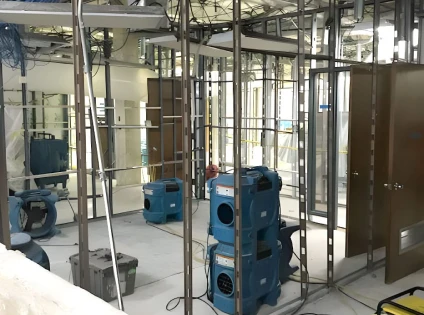
Pro Value Contracting uses commercial-grade drying equipment, including industrial air movers and desiccant dehumidifiers, to properly dry affected materials. Consumer fans and dehumidifiers from a hardware store are rarely powerful enough for structural drying.
FAQs on Emergency Water Shutoff for California Homeowners
Where is the main water shutoff valve in a typical San Diego home?
In most San Diego homes, the main indoor shutoff is near where the water supply line enters the house, often in the garage, utility room, or near the water heater. There is also a curb stop valve at the street in a concrete meter box near the front of your property.
What do I do if my main shutoff valve is stuck and will not turn?
Do not force it with excessive pressure, as this can break an already corroded valve. Use the curb stop at the street meter as a backup, or call the City of San Diego Public Utilities emergency line at (619) 515-3525. After the emergency is resolved, have a licensed plumber replace the faulty valve.
How quickly does water damage lead to mold in San Diego?
Mold can begin growing within 24 to 48 hours in San Diego’s warm, occasionally humid conditions, especially in coastal neighborhoods. The longer wet materials stay wet, the higher the risk. Professional drying equipment is usually needed to fully dry structural materials within the safe window.
Will my homeowner’s insurance cover a water emergency from a burst pipe?
Most standard California homeowner’s insurance policies cover sudden and accidental water damage, including burst pipes. They typically do not cover gradual leaks or flooding from outside sources. Document the damage thoroughly with photos before beginning cleanup and call your insurer promptly.
Can I turn off water to just one area of my home without shutting off the whole house?
Yes. Most fixtures have individual angle stop valves nearby. Under-sink valves handle that sink only, toilet valves handle that toilet only, and the water heater has its own supply shutoff. Learning these localized valves means you can isolate a problem without cutting water to the entire household.
Do I need a permit to replace a water shutoff valve in California?
California building codes generally require a licensed plumber for any work on supply lines, and some municipalities require permits for valve replacements on main lines. In San Diego, minor fixture-level valve replacements are typically handled without a permit, but main line work should involve a licensed contractor to stay code-compliant.
Wrap Up and Next Steps
Knowing your shutoff valves and acting fast in a water emergency can protect your home from serious structural damage and mold. Take 30 minutes this week to locate, label, and test every valve in your home.
If water damage has already occurred, do not wait. Contact Pro Value Contracting at (888) 508-6580 for emergency water damage restoration throughout San Diego, CA. Call now or visit our website to schedule an assessment and get your home drying as fast as possible.